Analogy/Homology Blog Post
 |
| Bottlenose Dolphin |
Largemouth Bass
|
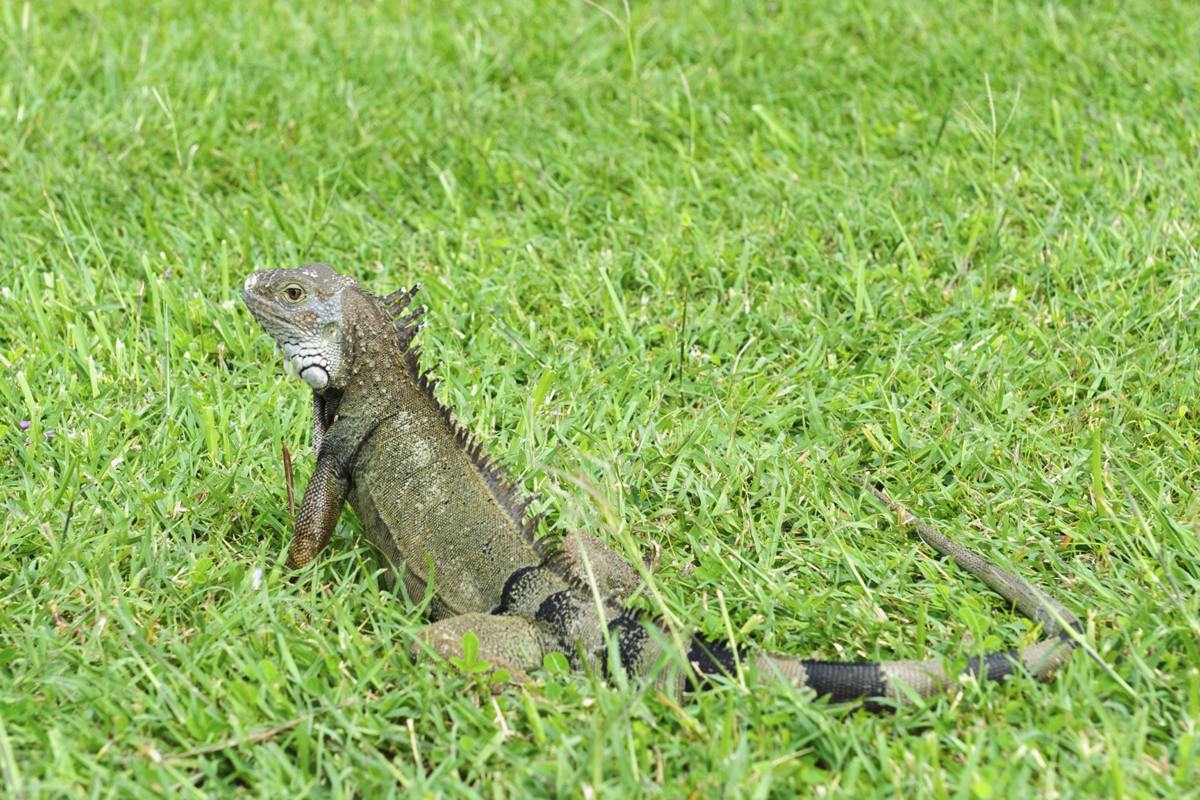
2. The homologous trait that these two species share are the structure of their hands or paws. Although the structures of their hands are similar, they both have very different functions due to the differences in their environment. The cat has carpal and footpads that help them walk on different types of terrain. They also have tendons that control when they want their claws to be out. The lizard on the other hand, has delicate toes with claws that are always exposed. The Casquehead lizard specifically has skin in between its hands and feet so it can move very quickly on the surface of water.
3. The ancestor of the cat would be the Miacis that lived over fifty million years ago. Equipped with keen eyesight and hearing, it was an avid hunter which used it's ferocious claws to attack it's meals. As for the lizard, the earliest known species was the Rain Lizard which generally stayed on its four claws to be low to the ground, feeding on vegetation and slow moving prey.
4.
Analogous Traits:
1. The two different species I chose to compare their analogous traits are the freshwater largemouth bass that derive from lakes and the common bottlenose dolphin that live in the ocean.
2. The analogous trait that these two very different species share are their fins that they use to navigate around in the water. Since they have both lived in water, they have evolved and adapted through time, developing efficient body parts. They both use their fins for mobility reasons and each pack explosive speed which allows them to escape their predators but catch their prey. Although these two are unrelated species, they share some of the same traits because of their environment.
3. A possible common ancestor of these species could be the Tiktaalik. A lobe-finned fish from about 375 million years ago that retains some features of current four-legged animals. It was complete with scales and gills while also having fin structures complete with interior bones for paddling. The traits given off from this ancestor would be analogous because the future species were given different environments to which they had to adapt to.
4. Images of bass and dolphin are at the top.
Hi Justin!
ReplyDeleteGreat post! Its crazy that something that we perceive as cute and cuddly shares traits with a lizard! I liked the species that you selected for your post especially for the homologous section of the assignment, however you did not include the common ancestor that is shared between the American short hair cat and the Casquehead lizard. I saw that you provided two examples of common ancestors for each species, however that was not what the assignment was asking for. Besides that minor mistake this was great post. Keep up the hard work.
I'm not seeing the image for your bass. You also have the images reversed, with the analogous trait pictures the homologous text and vice versa. That was a little confusing.
ReplyDeleteHomology:
Good opening description.
Okay on your description of your homologous traits, but remember that it is helpful to be able to look at fossil evidence to confirm ancestry. That means understanding the skeletal structural differences. How do the "hand" structures in these two differ on the skeletal level and how can you tie that into their functional differences? A common example would be the "splay" or spread of the digits, tight and compact in cats (for speed) and wide in lizards (to move over sandy loose soil or even over wet muddy areas.
The question on ancestry is about the *common ancestor* shared by these two species and how you can use that information to confirm that these are indeed homologous. The cat is a mammal, and mammals arose from reptiles. Lizards are also reptiles, so we know that the common ancestor was an archaic reptile. We also know, from the fossil record (hence the importance of skeletal comparisons) that archaic reptiles possessed the generalized forelimb structure in question here, passing it onto these two descendents with changes occurring due to environmental differences producing different evolutionary pressures. That's what we need to know to confirm homology.
Analogy:
A little thin on the description here.
Good description on the commonalities of structure and function of the fin traits.
"The traits given off from this ancestor would be analogous because the future species were given different environments to which they had to adapt to."
You are correct that that the common ancestor was likely an early archaic fish... but that ancestor possessed the fins in question, so how does this demonstrate that these traits are analogous? You are on the right track in the sentence I just quoted, but you needed to finish the story. Dolphins "fins" evolved after dolphins split off from terrestrial mammals, i.e., long after the split with ancient fish. This provides us with the evidence we need to confirm that this trait did evolve independently in at least one of these organisms, making these traits analogous.
Good images.